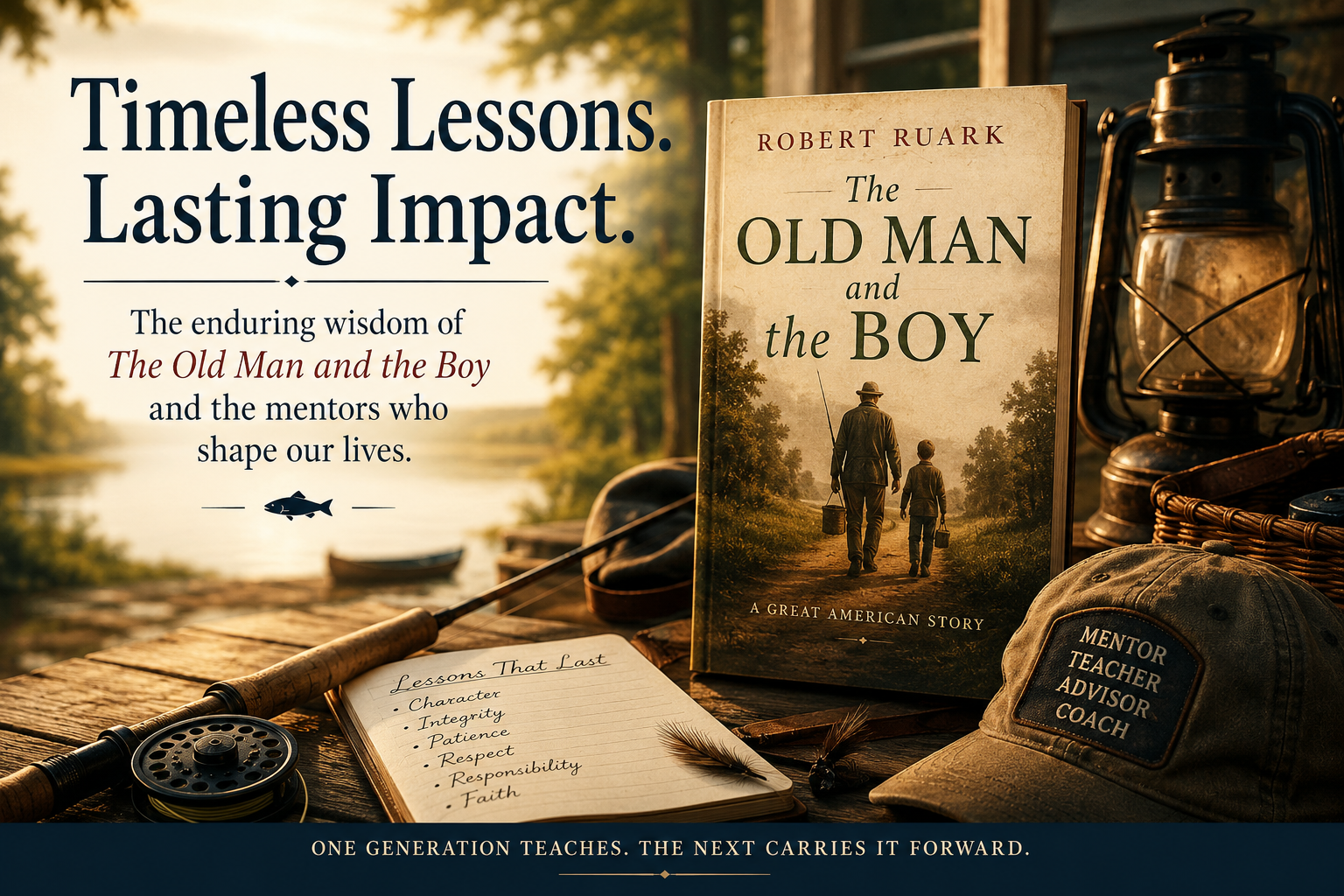
The Old Man and the Boy by Robert Ruark is one of those rare books that seems to become more meaningful with age. It isn’t really about hunting or fishing, although those are the settings. It is about the transfer of wisdom from one generation to the next.
The book is a collection of stories based on Ruark’s childhood in North Carolina during the 1920s. The unnamed “Old Man”—his grandfather—is not wealthy, famous, or highly educated. Yet he possesses an extraordinary understanding of life. Through days spent bird hunting, fishing, sitting on a porch, or simply observing people, he teaches the Boy lessons that schools seldom teach.
Among those lessons are:
- Character matters more than reputation.
- A man’s word should be enough.
- Respect women, elders, and yourself.
- Learn patience; not everything worth having comes quickly.
- Face hardship without complaining.
- Know when to talk and when to listen.
- Treat success with humility and failure with dignity.
- Leave people and places better than you found them.
The beauty of the book is that the Old Man never lectures. He teaches through stories, experience, humor, and example. Every hunting trip becomes a lesson about life.
Why the Themes Never Grow Old
The world has changed dramatically since Robert Ruark wrote the book in 1957. Children carry smartphones instead of BB guns. They spend more time indoors than in the woods. Yet the central message is arguably more important today than ever.
Every generation needs an “Old Man.”
It may not literally be a grandfather. Sometimes it is a father. Sometimes a teacher. A coach. A Scout leader. A youth pastor. An employer. A neighbor. An uncle. An Explorer Club advisor. Someone who has walked farther down the road and is willing to slow down long enough to help a young person navigate it.
Young people don’t simply need information. They need interpretation.
They need someone to explain why honesty matters when dishonesty seems easier. Why hard work beats shortcuts. Why courage often looks quiet rather than dramatic. Why integrity is built one decision at a time.
Technology can answer almost any question, but it cannot replace wisdom. Wisdom is usually passed from one life to another.
That is why books like The Old Man and the Boy remain timeless. The setting may be different, but the human need is unchanged. Boys still need men who model patience instead of anger, humility instead of arrogance, responsibility instead of excuses, and service instead of selfishness.
Why It Resonates With Me
One reason I believe the book has endured is that it reminds us that ordinary men can have extraordinary influence.
The Old Man never intended to become famous. He simply invested his time in a young boy. Yet decades later, millions of readers have benefited because one grandfather chose to teach while walking through fields, sitting in a duck blind, and talking beside a fishing hole.
That is encouraging for every mentor. You don’t have to write a bestselling book or give speeches to change a life. Sometimes all it takes is showing up consistently, sharing your experiences honestly, and caring enough to guide the next generation.
In many ways, The Old Man and the Boy captures the very mission of mentoring: one generation intentionally preparing the next. That mission never becomes outdated because young people will always need examples more than explanations.
As long as there are grandfathers, teachers, coaches, mentors, advisors, and parents willing to invest in young people, the lessons Robert Ruark celebrated will continue to find eager ears. The tools may change. The world certainly will. But the timeless principles of character, responsibility, humility, faith, and service will always be worth passing along.
Leave a Reply